
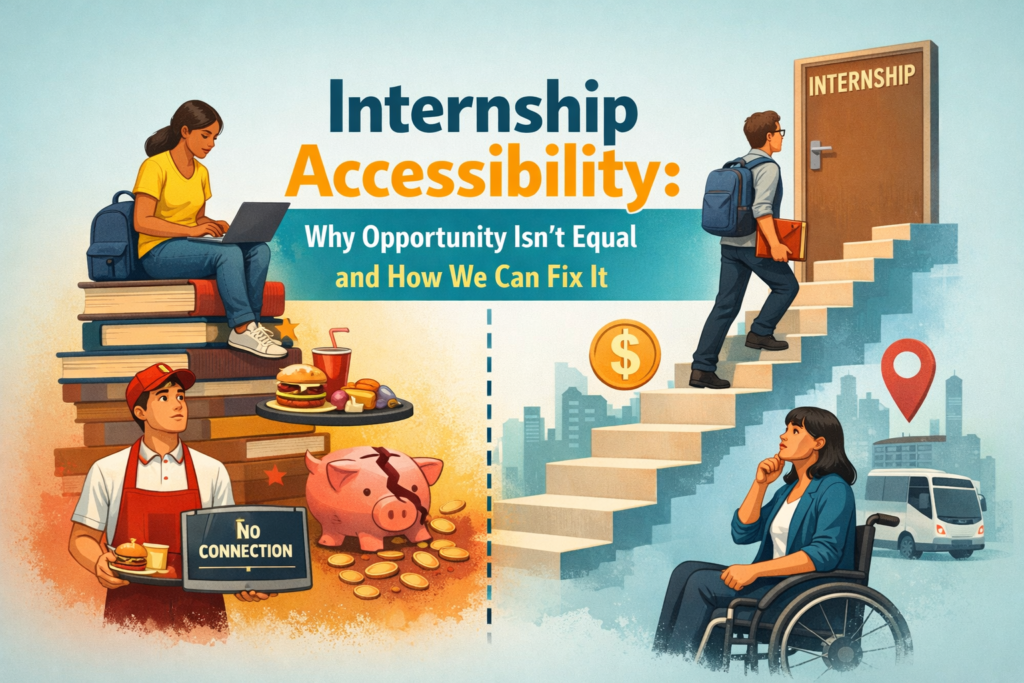
Internship opportunities are often seen as the gateway to a successful career—but what if access to those opportunities isn’t equal? In today’s competitive world, internships play a crucial role in shaping skills, building networks, and improving employability. However, not every student gets the same chance to benefit from them. This imbalance, known as internship accessibility, is a growing concern that highlights deeper inequalities in education and employment.
In this blog, we’ll explore why internship opportunities aren’t equally accessible, the impact of this imbalance, and most importantly, how we can fix it. We’ll also look at how platforms like LetsIntern are helping level the playing field through structured training-cum-internship programs in high-demand fields like Data Science (DS), Full Stack Development (FS), and Artificial Intelligence & Machine Learning (AI/ML).
Understanding Internship Accessibility
Internship accessibility refers to how easily students from different backgrounds can find, apply for, and successfully complete internships. While opportunities may exist, access to them is often influenced by factors such as financial stability, location, education, and exposure.
At first glance, internships may appear open to all. But in reality, systemic barriers prevent many talented individuals from participating. This creates an uneven playing field where opportunity is not based solely on merit, but also on privilege.
Why Opportunity Isn’t Equal
1. Financial Constraints
One of the biggest barriers to internship accessibility is money. Many internships, especially in competitive industries, are unpaid or offer minimal stipends.
For students from financially stable backgrounds, unpaid internships may be manageable. But for others, working without income is simply not an option. They may need to take paid jobs instead, missing out on valuable career-building experiences.
2. Geographic Barriers
Internships are often concentrated in major cities like Bangalore, Mumbai, or Delhi. Students from smaller towns or rural areas face multiple challenges:
- High relocation costs
- Lack of affordable accommodation
- Limited local opportunities
This geographic imbalance restricts access for a large portion of students.
3. Lack of Awareness and Guidance
Not all students have equal access to career guidance. Many are unaware of:
- Where to find internships
- How to apply effectively
- What skills are required
Without proper mentorship, even capable students may miss out on opportunities simply because they don’t know how to navigate the system.
4. Network and Referral Advantage
Let’s be honest—connections matter. Students with access to professional networks often get referrals, which significantly increase their chances of landing an internship.
On the other hand, students without such networks must rely solely on online applications, where competition is intense and visibility is low.
5. Skill Gap Before Entry
Ironically, many internships require prior experience or advanced skills. This creates a cycle:
- You need experience to get an internship
- But you need an internship to gain experience
Students who lack access to training resources fall behind before they even begin.
6. Bias and Inequality
Factors like college reputation, English proficiency, gender, and confidence can influence hiring decisions. These biases, whether conscious or not, further widen the gap in access.
The Impact of Unequal Internship Access
The lack of equal access to internships has far-reaching consequences:
Widening the Skills Gap
Students who miss out on internships graduate without practical skills, making them less employable.
Reduced Career Opportunities
Internships often lead to full-time roles. Without them, students lose a key pathway into the workforce.
Limited Social Mobility
Opportunities remain concentrated among privileged groups, making it harder for others to move up economically.
Talent Loss
Companies miss out on diverse talent simply because access is unequal.
How We Can Fix Internship Accessibility
Solving this issue requires effort from students, institutions, and organizations alike.
1. Promote Paid and Remote Internships
Organizations should offer fair compensation and expand remote opportunities. This allows students from all backgrounds to participate without financial or geographic limitations.
2. Improve Career Awareness
Colleges and platforms should actively guide students by:
- Hosting workshops
- Providing mentorship
- Sharing internship resources
Awareness is the first step toward accessibility.
3. Focus on Skill Development
Students need access to affordable, high-quality training programs that prepare them for internships. This reduces the entry barrier and builds confidence.
4. Encourage Inclusive Hiring Practices
Companies should adopt skill-based hiring rather than relying heavily on college reputation or referrals. This ensures a more diverse and capable workforce.
5. Strengthen Industry-Academia Collaboration
Colleges must work closely with industries to align curricula with real-world requirements and create more internship opportunities for students.
LetsIntern: Making Internship Opportunities More Accessible
Bridging the gap between education and employment requires practical solutions—and this is where LetsIntern plays a vital role.
LetsIntern offers training-cum-internship programs designed to make internships more accessible and meaningful for students across different backgrounds.
Key Programs Offered:
- Data Science (DS)
- Full Stack Development (FS)
- Artificial Intelligence & Machine Learning (AI/ML)
These programs combine structured learning with real-world application, ensuring that students don’t just learn—but also gain hands-on experience.
Why LetsIntern Stands Out
- Affordable Learning Opportunities
Designed to be accessible for students from diverse financial backgrounds. - Practical Project-Based Training
Learn by doing, not just by studying. - Industry-Relevant Curriculum
Stay updated with current trends and technologies. - Remote Accessibility
Participate from anywhere, eliminating geographic barriers. - Certification and Experience
Build a strong resume with recognized credentials.
If you’re looking to overcome barriers and gain real-world experience, exploring a LetsIntern internship program can be a smart step forward.
👉 Apply and explore all programs here:
https://letsintern.in/current-internships/
The Role of Students: Taking Initiative
While systemic changes are important, students also need to take proactive steps:
- Actively search for opportunities
- Build skills through online platforms
- Network with peers and professionals
- Apply consistently and learn from rejections
Accessibility improves when preparation meets opportunity.
The Future of Internship Accessibility
The future looks promising. With the rise of remote work, online learning, and digital platforms, internships are becoming more inclusive.
However, true equality will only be achieved when:
- Financial barriers are minimized
- Opportunities are widely distributed
- Skills are prioritized over background
Final Thoughts
An internship is more than just a line on a resume—it’s a stepping stone to a successful career. But when access to internships is unequal, it limits not just individual potential, but also collective progress.
By addressing financial, geographic, and informational barriers, we can create a more inclusive ecosystem where every student has a fair chance to succeed.
Platforms like LetsIntern are already making a difference by providing accessible, skill-based training-cum-internship programs. Now, it’s up to students, educators, and employers to continue pushing for change.
Because opportunity shouldn’t depend on where you come from—it should depend on what you can do. And the right internship can make all the difference.